Why you should stay in the game
J
Jorjgvara
Jul 10, 2026 · EN
72
20
5
Gold earned
0.0092 gold · 0.0001 from the game fund for every read and every like
If you’re reading this, it means you’ve discovered one of the most interesting games you can find on the internet right now. This is by far the most engaging city-building simulation I’ve ever come across, with the cleanest and most transparent mechanics I’ve seen in the genre.Here’s why it makes sense to stay and not just pass it by:The game is very complex, but complexity doesn’t equal difficulty. Here, complexity means depth and genuine interest first and foremost.
This is not another Web3 project built on speculative altcoins. Everything here is transparent. There’s no native speculative token — the entire economy is based on real gold as its core equivalent.
Maximum transparency. You can see everything: other players’ towns and their buildings, exactly how much resources everyone has in their warehouses and bank accounts. You can view the full market volumes and see exactly how much of each item is available. This allows you to make well-informed decisions in every aspect of the game — production chains, speculative trading, or even warfare.
The market economy is limited only by taxes. There are no artificial restrictions. You can buy and sell as much as your warehouses can hold, with no limits on quantity or trading frequency.
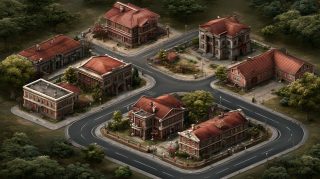
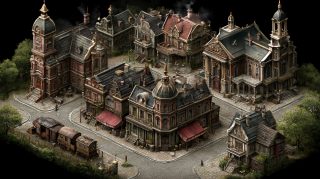
You will always have room to grow. The 49×49 grid is large enough to satisfy even the biggest ambitions. Every city is unique, and over time your own city will become truly one-of-a-kind as well.
These are the first five points that stood out to me when comparing this game to others. After looking at many similar projects, I came to a clear conclusion: even though the game is still in its early transformation phase and has plenty of growing pains, no other project comes even close in terms of scale and long-term ambition. That’s exactly why I’m here and carefully diving into every detail of the game.If you decide to stay, be ready to invest a lot of time: thinking, calculating, and planning. Of course, you can start simple — just click on your starter buildings, produce basic tier-1 goods, and sell them at the lowest price. But if you want to build a truly profitable city economy, you’ll need to spend time and mental energy figuring out the best development path, because mistakes here cost real gold.The starting balance is very generous. You can comfortably develop using only your own actions. Basic goods sell well on the market, so you just need to understand the market and decide what’s most profitable to produce. You don’t even need to build a gold mine (which requires tier-5 goods). Simply feeding chickens with wheat will already generate gold for you, and chickens — like other tier-1 goods — will always be in demand.The most important thing to realize right away is this: Energy is your real capital. Energy is converted into gold through your actions. If you have energy, you will have gold. The only question is the conversion rate — how efficiently you can turn energy into gold.At first, the small decimal numbers might trip you up. You’ll probably sell something ten times cheaper than you intended at least once because of those six digits after the decimal point. You need to get used to it. It feels a bit inconvenient at the beginning, but it’s actually one of the unique features of the game — no fake currencies, everything is in real gold.Because of the various taxes (including the occupation tax if your town gets captured), you might initially feel skeptical about the profitability of your actions. However, your energy income is constantly flowing. If you buy and equip clothing, the increased energy regeneration is usually enough to cover both the clothing cost and all taxes, while still leaving you with resources for further development. In real life, taxes are much harsher no matter which country you’re from. Here, all taxes go either into public funds or directly to other players.The market is already quite dynamic even with a relatively small number of active players. Over time it will become even more active. Some goods already have strong demand, and this is before the big spenders arrive — the players who will happily spend gold to build large, powerful cities. So the market still has a lot of room to grow.The economic model of this game is genuinely brilliant (as pompous as that may sound, I can’t describe it any other way). For example, in most games, speeding up actions means buying premium currency (crystals, etc.) from the administration. Here, everything works differently: you buy another player’s time by paying them directly, like an employer hiring help. Everyone wins — smaller players who want to sell their time get paid, and bigger players can accelerate their development.The labor market, just like the resource market, is hard to predict. It all depends on what kind of players join the game. But one thing is certain: the market will be dynamic.So don’t miss your chance to start building your town while the game is still in its early days. Right now the market prices are very favorable for a strong start. They will definitely change over time — they might become less profitable for newcomers, or possibly even better. No one knows for sure yet.The most interesting part is still ahead.