# Why the Marketplace Is the Most Important Building You Never Construct
P
Pibasacro
Jul 18, 2026 · EN
42
9
2
Gold earned
0.0051 gold · 0.0001 from the game fund for every read and every like
# Why the Marketplace Is the Most Important Building You Never Construct
When new players begin their journey, they naturally focus on construction. Every decision revolves around expanding the city, placing new buildings, hiring workers, and increasing production. Watching your first businesses operate successfully is satisfying, and it is easy to believe that building more industries is the only path toward prosperity.
However, every experienced player eventually reaches the same conclusion: production alone is never enough.
No matter how efficient your city becomes, there will always be resources you need, products you cannot manufacture quickly enough, and opportunities to earn additional income from goods you no longer require. This is where the Marketplace becomes one of the most valuable systems in the entire game.
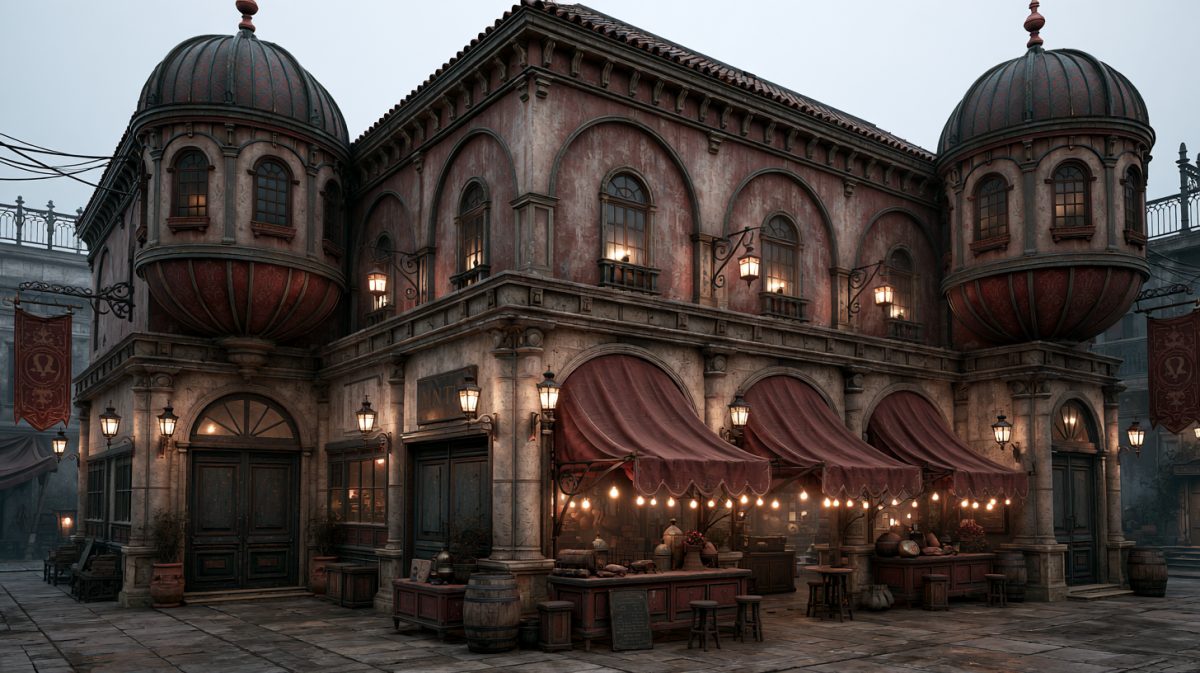
Although it does not appear on your map like a factory or a farm, the Marketplace functions as one of the most important buildings your city will ever use. It connects your economy to thousands of other players, allowing every city to trade, cooperate, and grow together.
The Marketplace is not controlled by the game. It is controlled by its players.
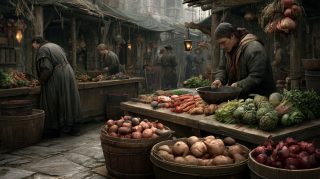
Every offer you see has been created by someone else. Every resource available for purchase has been harvested, mined, manufactured, or earned by another city. Likewise, every product you decide to sell becomes available to another player searching for exactly that item.
This simple concept transforms the game's economy into something much more dynamic than a traditional strategy game.
Instead of purchasing resources from an unlimited computer-controlled store, you participate in a living market where prices change according to real supply and demand. Every transaction reflects the decisions of actual players. If many cities produce the same resource, competition increases and prices generally fall. If a particular material becomes difficult to obtain, its value naturally rises.
Understanding this principle changes the way you manage your city.
Rather than asking yourself whether you should build another production chain immediately, you begin asking a more important question: would buying this resource be a better investment?
Sometimes the answer is yes.
Imagine that your furniture factory suddenly requires more wood than your forests can provide. Expanding your logging industry would require additional land, construction costs, and new workers. Purchasing wood from the Marketplace may allow production to continue immediately while saving valuable resources that can be invested elsewhere.
The Marketplace provides options.
Instead of forcing every city to become completely independent, it encourages cooperation through trade. One city may specialize in agriculture while another focuses on heavy industry. Each benefits by selling its strongest products and purchasing what it lacks.
This specialization creates healthier economies than attempting to produce everything alone.
Many beginners believe self-sufficiency should always be their objective. While producing your own resources can certainly be beneficial, trying to master every industry too early often spreads your investments too thin. Buildings require maintenance, workers require salaries, and every production chain demands careful management.
Buying certain resources from other players can actually increase profitability by allowing your city to concentrate on its most efficient industries.
The Marketplace therefore becomes a tool for strategic decision-making rather than simply a place to buy missing materials.
Its organization reflects this simplicity.
Trading is divided into four main categories, each serving a specific purpose.
Raw materials include the essential resources that fuel production. Wood, stone, clay, metals, grain, agricultural products, and gold ore all begin their economic journey here. Every manufacturing industry depends on these materials, making this market constantly active.
Consumer goods represent the finished products created from those resources. Food feeds your population, clothing improves living standards, beverages satisfy demand, and luxury products such as jewelry contribute to prosperity. These goods complete the production cycle before reaching your citizens.
The People Market introduces another important element: labor. Factories cannot operate without workers, and growing cities frequently need additional employees. Instead of waiting for natural population growth, players can exchange workers directly, allowing businesses to expand much more rapidly.
Finally, the Share Market provides opportunities beyond traditional production. Players can buy and sell CoinRepublik shares using GOLD, creating another layer of economic activity based on investment rather than manufacturing.
Although these categories contain completely different assets, they all share one important characteristic.
Buying and selling always follow the same straightforward process.
Choose a product.
Review the available offers.
Compare prices.
Complete the transaction.
Or, if you are selling, publish your own offer and wait for another player to purchase it.
This consistency makes the Marketplace easy to learn. After completing only a handful of trades, navigating every category becomes intuitive.
One habit separates successful traders from everyone else: they never rush.
Instead of purchasing the first offer they see, they compare prices carefully. Even small price differences become significant after hundreds of transactions. Likewise, before selling products, experienced players examine competing offers to ensure their prices remain attractive without sacrificing unnecessary profit.
Over time, these small decisions accumulate into substantial financial advantages.
Another lesson worth remembering is that profit does not always come from selling expensive products.
Sometimes reducing production costs creates even greater rewards.
Buying inexpensive raw materials, improving manufacturing efficiency, and minimizing unnecessary expenses often increase profits more effectively than chasing the highest selling price.
Successful cities therefore manage both sides of every transaction.
They think like producers when manufacturing goods.
They think like merchants when buying and selling them.
One of the Marketplace's greatest conveniences is automatic storage.
Every purchase immediately appears inside your city's shared warehouse.
There are no delivery routes to organize, no transportation delays, and no additional management required. Resources purchased from another player become available exactly as if they had been produced by your own buildings.
This unified inventory system keeps city management simple while allowing production to continue without interruption.
As your city grows larger, the Marketplace gradually becomes more than a place to exchange goods.
It becomes a source of information.
Price increases reveal growing demand.
Falling prices indicate expanding supply.
Frequent shortages highlight profitable production opportunities.
Attentive players learn to observe these signals before making major investments.
Instead of randomly constructing new industries, they allow the economy to guide their decisions.
Perhaps the most encouraging aspect of the Marketplace is that experience matters more than perfection.
Your first purchase does not need to be perfectly timed.
Your first sale does not need to maximize every possible coin.
Each transaction teaches something valuable about pricing, competition, and demand.
Confidence grows naturally through practice.
Eventually, checking market prices becomes as routine as collecting production or constructing new buildings.
The Marketplace stops feeling like a separate feature and becomes part of your daily strategy.
Every successful city depends on this balance.
Buildings create value.
Workers keep industries running.
The Marketplace transforms that value into opportunity.
Without production, there is nothing to trade.
Without trade, production quickly reaches its limits.
Together, they create a thriving economy capable of supporting continuous growth.
The strongest cities are not necessarily those with the largest factories or the biggest warehouses. They are the cities whose leaders understand how to combine efficient production with intelligent trading. By treating the Marketplace as an essential partner rather than an occasional convenience, you give your city access to resources, customers, investments, and opportunities that would otherwise remain out of reach.
In the end, prosperity is not determined by what your city can produce alone. It is determined by how effectively it participates in the shared economy. Every purchase strengthens your industries, every sale rewards your efforts, and every trade brings your city one step closer to becoming a powerful and prosperous economic empire.