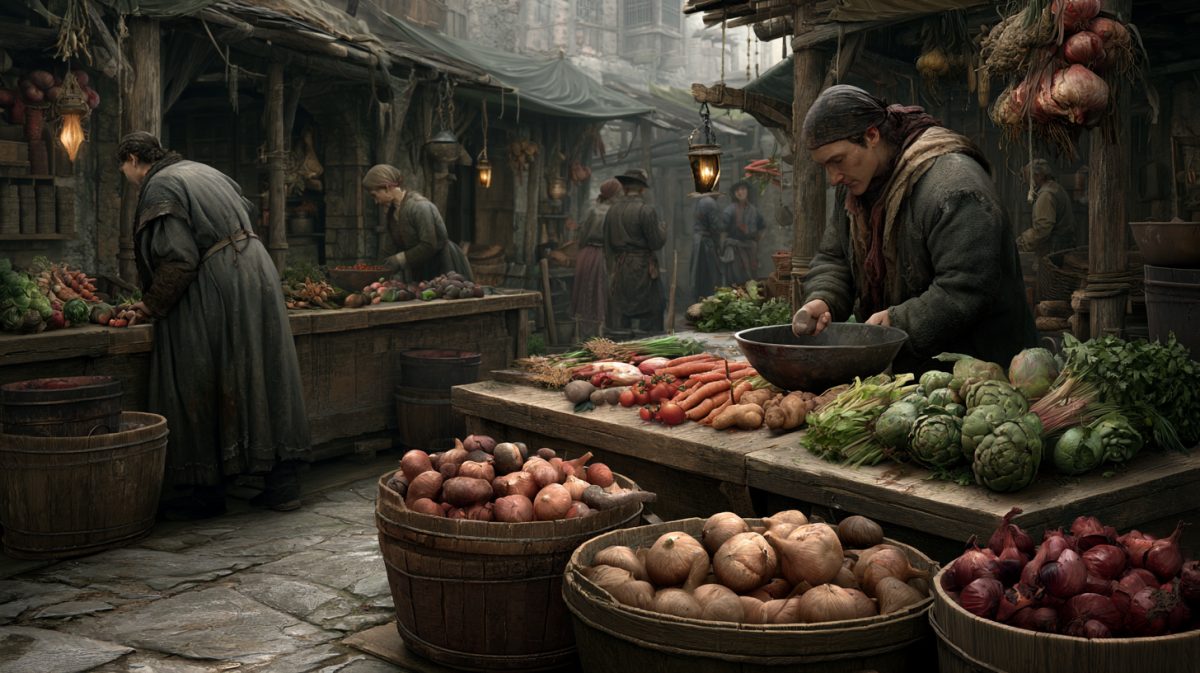
# The Marketplace: The Economic Engine Behind Every Successful City
H
hkatib
Jul 16, 2026 · EN
74
15
2
Gold earned
0.0089 gold · 0.0001 from the game fund for every read and every like
# The Marketplace: The Economic Engine Behind Every Successful City
As your city begins to grow, you will quickly discover that constructing buildings is only one part of managing a successful economy. Farms harvest crops, mines extract valuable minerals, and factories transform raw materials into useful products, but none of these industries can operate efficiently in isolation. Every city eventually reaches a point where it needs resources it cannot produce fast enough or accumulates products it no longer needs. This is where the Marketplace becomes indispensable.
The Marketplace is far more than a simple buying and selling screen. It is the center of the game's economy, connecting thousands of players through trade. Every transaction represents an opportunity for cooperation, profit, and growth. Whether you are purchasing materials for a new production chain, recruiting additional workers, or selling surplus goods, the Marketplace allows your city to interact with the wider world.
Many beginners hesitate to use the Marketplace because they believe they must first understand every economic rule. Fortunately, the opposite is true. The Marketplace is designed to be learned through practice. Small transactions are inexpensive, mistakes are rarely costly, and every trade helps you understand how the economy functions.
One of the first concepts every player should understand is the difference between production and trade. Your city's industries are responsible for creating goods. The Marketplace simply allows those goods to change owners. It does not manufacture resources, generate products, or employ workers. Everything available for purchase has been produced, collected, or earned by another player.
This player-driven system creates a living economy. Prices are not determined by fixed game values but by supply and demand. When many players produce the same resource, competition generally pushes prices downward. When supplies become limited or demand suddenly increases, prices naturally rise. Every number you see reflects the collective decisions of thousands of active players.
Understanding this principle changes the way you think about your city. Instead of asking, "Can I produce everything myself?" experienced players ask, "What should I produce, and what should I buy?" The answer often depends on market conditions, production costs, and your long-term strategy.
Imagine that your bakery needs flour, but your grain fields cannot meet demand. Building another farm might require additional land, workers, and investment. Purchasing flour from another player may be faster, cheaper, and more efficient. Within seconds, the goods arrive in your warehouse, allowing production to continue without interruption.
The Marketplace also solves the opposite problem. Suppose your sawmill produces more lumber than your construction projects require. Rather than allowing valuable inventory to remain unused, you can list the excess for sale. Another player who needs lumber purchases it, and your warehouse space is freed while your treasury grows.
This continuous exchange benefits the entire game. Buyers save time by obtaining resources immediately, while sellers earn income from products they would otherwise leave in storage. Every successful trade strengthens both cities involved.
To keep trading organized, the Marketplace is divided into four main categories. Although each category contains different items, they all operate according to the same simple principles.
The Raw Materials Market contains the basic resources that support every production chain. Wood, stone, clay, grain, agricultural products, metals, and gold ore can all be bought and sold here. Most manufacturing industries depend on these materials, making this section one of the busiest areas of the Marketplace.
The Consumer Goods Market focuses on finished products. These include food, beverages, tobacco, clothing, and jewelry—goods produced for your citizens rather than your factories. As cities expand and populations grow, demand for these products remains consistently strong.
The People Market allows players to exchange workers and specialists. Labor is one of the most valuable resources in the game because every production building depends on qualified employees. Buying workers enables rapid expansion, while selling excess labor can generate additional income.
Finally, the Share Market allows players to trade CoinRepublik shares using GOLD. Unlike ordinary goods, shares represent financial investments rather than physical products. This market offers experienced players another opportunity to diversify their wealth and participate in the broader economy.
Although these four markets contain different products, using them is remarkably straightforward. Every transaction follows the same basic process. Select a product, compare the available offers, choose the listing that best matches your needs, and complete the purchase. If you wish to sell, create your own listing and wait for another player to buy it.
Learning to compare prices is an important habit. Multiple players often sell identical products, but not always at identical prices. Taking a few extra moments to review several offers before making a purchase can significantly reduce your production costs over time.
Selling requires similar attention. Setting your price too high may discourage buyers, while setting it too low reduces your profits. Successful traders regularly monitor market prices and adjust their listings to remain competitive without sacrificing unnecessary income.
One of the greatest advantages of the Marketplace is that it encourages specialization. No city needs to produce every resource available in the game. Some players focus on agriculture, while others become experts in mining, manufacturing, or luxury goods. Trade allows every city to benefit from the strengths of others instead of duplicating every production chain.
As your experience grows, you will begin to recognize market trends. Certain products become more valuable during periods of rapid expansion because many players require them simultaneously. Other resources may temporarily lose value when production exceeds demand. Observing these patterns can help you decide when to buy, when to sell, and when to wait.
Fortunately, becoming a successful trader does not require predicting every market movement. Consistent, well-informed decisions usually produce better long-term results than attempting to speculate on every price change.
Another feature that makes trading convenient is automatic delivery. Every purchase made through the Marketplace is transferred directly into your city's shared warehouse. There is no transportation system to manage, no delivery routes to organize, and no additional waiting time. Purchased goods become immediately available for production or consumption.
This shared warehouse also stores everything produced by your own buildings. Whether resources originate from your farms, your factories, or another player's city, they are combined into one central inventory. This streamlined system simplifies city management and allows you to concentrate on strategic decisions rather than logistics.
Many new players worry about making mistakes during their first trades. Fortunately, the Marketplace is forgiving. Buying a small quantity of resources or selling a modest surplus involves very little risk. Every completed transaction teaches you something about prices, demand, and the rhythm of the economy.
Over time, trading becomes as natural as constructing buildings or collecting production. You begin to anticipate shortages before they occur, recognize profitable opportunities, and understand how different industries interact with one another.
Ultimately, the Marketplace is much more than a place where items change hands. It is the economic engine that connects every player, every city, and every industry. It transforms isolated settlements into a vibrant, interconnected economy where cooperation and competition exist side by side.
Mastering the Marketplace does not happen overnight. It develops through observation, experimentation, and experience. Start with small trades, learn from each transaction, and gradually build your confidence. As your understanding grows, you will realize that every successful city depends not only on what it produces, but also on how intelligently it trades. In the long run, the greatest fortunes are earned not simply by producing more, but by knowing exactly when to buy, when to sell, and how to keep your city moving forward.