# The Marketplace Advantage: Turning Resources into Opportunity
P
Pibasacro
Jul 19, 2026 · EN
77
20
3
Gold earned
0.0097 gold · 0.0001 from the game fund for every read and every like
Every city starts with a dream of growth. You clear land, construct buildings, recruit workers, and carefully watch as your first industries begin producing resources. At this stage, success seems straightforward: build more, produce more, and expand whenever possible. Yet as your city develops, you quickly discover that growth is not only about production. The most successful cities understand another important truth: prosperity comes from knowing how to trade.
This is where the Marketplace enters the picture.
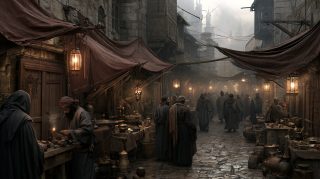
The Marketplace is much more than a place where goods are exchanged. It is the center of economic activity, the meeting point where thousands of players connect their cities through trade. Every day, enormous quantities of resources, products, workers, and shares change hands. Some players come to purchase materials for their factories. Others arrive to sell surplus production. Many do both. Together, they create a living economy that evolves every hour.
For new players, the Marketplace can seem overwhelming at first. There are many categories, hundreds of products, and constantly changing prices. However, beneath this apparent complexity lies a remarkably simple system. Once you understand the basic principles, trading becomes one of the most enjoyable and rewarding aspects of the game.
The first thing to remember is that the Marketplace belongs entirely to the players. Unlike a traditional game store, it does not generate resources automatically. Every item available for sale was produced, collected, or earned by another player. Similarly, every product you decide to sell becomes part of the same economy and may eventually help another city continue growing.
This player-driven structure is what makes the Marketplace so dynamic. Prices are not fixed forever. Instead, they change according to supply and demand. When many players produce a particular resource, its price may decrease because buyers have numerous options. When demand increases and supplies become limited, prices often rise. These fluctuations create opportunities for attentive traders who understand the needs of the market.
One of the greatest benefits of the Marketplace is the freedom it provides. Imagine that your city needs stone to complete a construction project, but your quarry cannot produce enough in time. Without a trading system, your progress would stop until production catches up. Thanks to the Marketplace, you can simply purchase the stone from another player and continue building immediately.
The same principle applies to every stage of development. Whenever your city lacks something, the Marketplace offers a solution. Instead of waiting, you can buy what you need and keep moving forward.
Of course, trading is not only about buying. Selling is equally important.
As your industries become more productive, you will often generate more resources than you can use. A farm may produce excess grain. A mine may fill your warehouse with surplus ore. A factory may manufacture more goods than your citizens currently require. Leaving these products unused represents a missed opportunity.
The Marketplace allows you to transform those surplus goods into income. Rather than sitting idle in storage, your products can be sold to players who need them. The money earned from these sales can then be reinvested into new buildings, additional workers, or more advanced production chains. In this way, trading becomes a powerful engine of growth.
The Marketplace is organized into four primary sections, each serving a different purpose.
The Raw Materials Market contains the resources that form the foundation of production. Wood, stone, clay, grain, metals, agricultural products, and gold ore are all traded here. These materials are essential because they feed the industries that produce more advanced goods.
The Consumer Goods Market focuses on finished products. Food, beverages, tobacco, clothing, and jewelry can all be bought and sold in this section. These products satisfy the needs of your population and contribute to the overall prosperity of your city.
The People Market deals with workers and specialists. Since labor is necessary for every business, this market provides a way to balance workforce needs. Growing cities can recruit additional employees, while others may choose to sell workers they no longer require.
The Share Market offers a different kind of opportunity. Here, players trade CoinRepublik shares using GOLD. Instead of exchanging physical products, participants invest in financial assets, adding another layer of strategy to the economy.
Although these four sections contain different types of assets, they all operate according to the same simple principle. You choose an item, review available offers, compare prices, and complete a transaction. The process remains familiar regardless of what you are buying or selling.
As you gain experience, you will discover that successful trading depends on observation. The best traders pay attention to market conditions. They notice which products are abundant and which are scarce. They compare prices before making purchases and evaluate competition before posting sales offers.
Small decisions often produce significant long-term results. Saving a little money on every purchase or earning a slightly higher profit on every sale may not seem important at first, but over hundreds of transactions, these advantages accumulate into substantial wealth.
Patience is another valuable skill. Not every opportunity must be taken immediately. Sometimes waiting for a better price can increase profits or reduce costs. Experienced traders learn when to act quickly and when to allow the market to develop naturally.
However, it is equally important not to become trapped by perfection. Some players spend so much time searching for the ideal price that they miss opportunities altogether. A functioning factory generating profit is usually more valuable than a factory standing idle while waiting for slightly cheaper resources. The goal is not to make perfect decisions every time but to make consistently good decisions.
One feature that greatly simplifies trading is automatic warehouse delivery. Whenever you purchase a product from the Marketplace, it is delivered directly into your city's shared warehouse. There are no transportation networks to manage and no shipping delays to consider. The goods become available immediately, allowing your industries to continue operating without interruption.
This centralized storage system also ensures that products from different sources are treated equally. Whether a resource was produced by your own city or purchased from another player, it enters the same inventory and can be used by any eligible building. This simplicity keeps city management efficient and accessible.
As your city expands, your relationship with the Marketplace changes. At first, you use it occasionally to solve shortages. Later, it becomes a regular part of your economic strategy. Eventually, it transforms into one of your most valuable planning tools.
Market prices reveal information about the economy. Rising prices may indicate growing demand. Falling prices can suggest oversupply. By observing these signals, players can identify profitable industries and make smarter investment decisions. The Marketplace becomes more than a trading platform—it becomes a source of knowledge.
Every thriving city participates in this cycle. Resources are produced, traded, transformed into new products, and traded again. Money flows between players, industries expand, and the economy continues evolving. The Marketplace keeps this entire system connected.
In the end, success is not determined solely by what your city produces. It is determined by how effectively you combine production and trade. A city that knows how to buy wisely, sell profitably, and adapt to changing market conditions will always have an advantage over one that ignores the opportunities around it.
The Marketplace is therefore not simply a feature of the game. It is the bridge between effort and reward, between production and profit, and between your city and the thousands of others that share the same world. Learn to use it well, and it will become one of the most powerful tools in your journey toward economic success.