# The Marketplace Never Sleeps: A Living Economy Built by Players
P

Pibasacro
Jul 25, 2026 · EN
86
19
6
Earned
6,089.99 MGA · the local value of 0.0001 gold from the author's country treasury for every read and every like
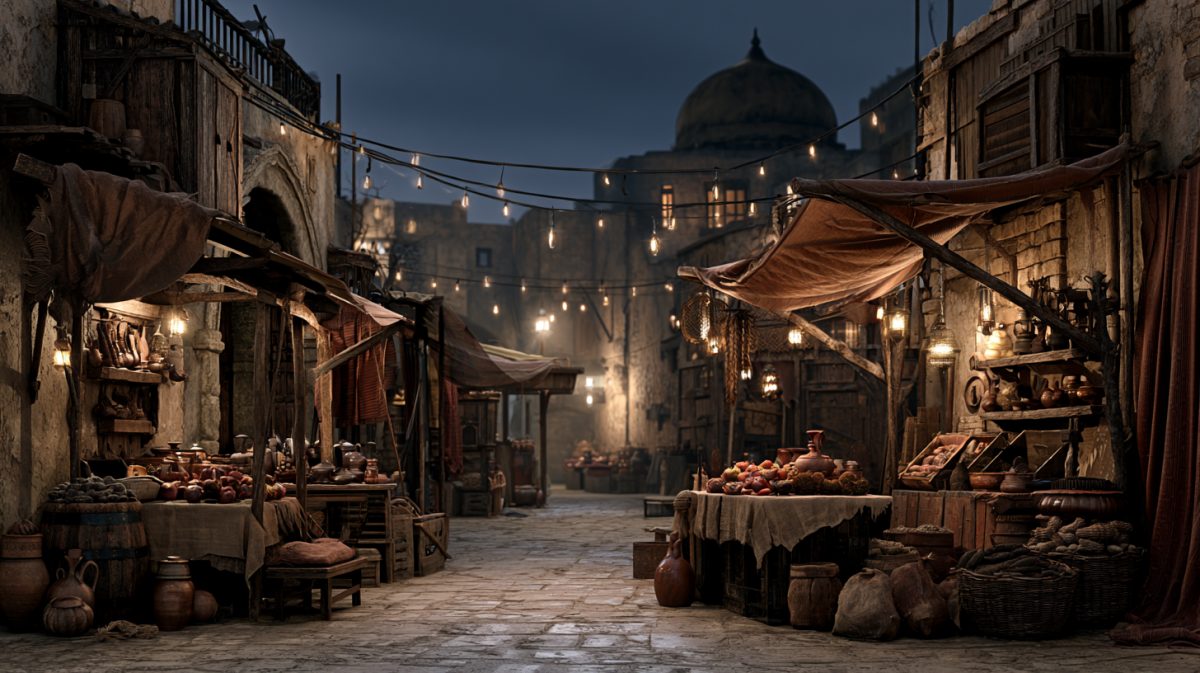
One of the most fascinating aspects of building a city is realizing that you are not building it alone. Although you manage your own industries, make your own investments, and decide how your economy develops, your city exists alongside thousands of others. Every player is producing resources, manufacturing products, expanding businesses, and looking for new opportunities. The Marketplace is where all of these individual stories come together.
Unlike your farms or factories, the Marketplace never stands still. Even while you are away from the game, other players continue buying, selling, producing, and investing. Prices change, inventories move, and new opportunities appear every hour. It is a living economy that continues to evolve because it is powered by real people instead of fixed game mechanics.
Understanding this idea changes the way you think about trading.
The Marketplace is not simply a feature you open when you need something. It is an active economic environment that rewards players who observe it carefully and participate regularly.
Every product listed on the Marketplace has its own journey.
Before a loaf of bread appears for sale, someone harvested grain, transported it through a production chain, employed workers, and invested money into the necessary businesses. Before a piece of jewelry reaches the market, another player mined valuable materials, refined them, manufactured the final product, and decided it was the right moment to sell.
Every offer represents effort.
Every purchase rewards that effort.
When you buy a product, you are not purchasing it from the game. You are buying the result of another player's planning and production. Likewise, when someone purchases one of your products, they are recognizing the value created by your city's economy.
This exchange is what makes the Marketplace feel alive.
Every successful city depends on these connections.
No matter how carefully you plan your production, situations will arise where your city needs help. Perhaps your factories consume resources faster than expected. Perhaps you decide to launch a completely new industry. Perhaps construction projects suddenly require more materials than your warehouse contains.
Instead of stopping your progress, the Marketplace provides immediate solutions.
Within a few moments, you can purchase exactly what your city requires and continue expanding without interruption.
The Marketplace also protects you from another common problem: overproduction.
Imagine that your farms produce twice as much grain as your population can consume. Without trade, those resources would simply occupy warehouse space while generating no additional value. The Marketplace transforms surplus production into profit by connecting you with players who need exactly what you have.
Nothing needs to be wasted.
Everything can become an opportunity.
One of the reasons experienced players enjoy the Marketplace is because it rewards observation rather than speed.
You do not need lightning-fast reactions or complicated calculations.
Instead, success comes from asking simple questions.
Is this price reasonable?
Do I really need to produce this myself?
Would selling now create a better opportunity later?
These questions gradually become part of your daily routine.
The Marketplace itself is designed to keep trading organized and intuitive.
The **Raw Materials Market** is where production begins. Timber, stone, clay, grain, metals, agricultural products, and gold ore provide the foundation for nearly every manufacturing process in the game.
The **Consumer Goods Market** represents the final stage of production. Here, cities exchange food, beverages, clothing, tobacco, jewelry, and other finished products that improve the lives of their citizens.
The **People Market** reminds players that workers are just as important as resources. Every successful factory requires employees, and every expanding city eventually needs additional labor. Buying and selling workers allows cities to adapt quickly as their economies change.
The **Share Market** offers a different type of opportunity. Instead of exchanging physical goods, players invest in CoinRepublik shares using GOLD, allowing them to participate in the financial side of the game's economy.
Although these four markets contain different products, they all operate according to one familiar pattern.
Search.
Compare.
Choose.
Trade.
This consistency allows new players to learn quickly while giving experienced players the confidence to make decisions efficiently.
One of the greatest mistakes beginners make is assuming that buying resources means they have somehow failed.
Nothing could be further from the truth.
Successful cities purchase resources every single day.
Buying is not a sign of weakness.
It is a sign of intelligent resource management.
If another player can produce a material more efficiently than you can, purchasing it allows you to focus your investments where they generate greater returns.
The Marketplace rewards specialization.
A city surrounded by forests may become famous for its timber industry.
Another may dominate food production.
A third may focus entirely on manufacturing luxury goods.
Instead of competing in every industry, these cities exchange their strengths through trade.
Everyone benefits.
As your experience grows, you will begin noticing that prices tell stories.
A rising price often indicates growing demand.
A falling price may suggest increasing competition.
Stable prices usually reflect balanced production.
The Marketplace quietly communicates what is happening throughout the game's economy without displaying a single news headline.
Players who pay attention to these signals often discover profitable opportunities before anyone else.
However, perfection is never required.
The goal is not to predict every market movement.
The goal is simply to make good decisions consistently.
Buy what supports your production.
Sell what your city no longer needs.
Invest your profits wisely.
Repeat the process.
Another feature that keeps the Marketplace enjoyable is its simplicity.
Every purchase arrives automatically in your shared warehouse.
There are no shipping companies to hire.
No transportation schedules to organize.
No complicated logistics to manage.
Your city receives the resources immediately, allowing businesses to continue working without delay.
This shared warehouse also stores everything produced by your own industries, creating one central inventory that serves your entire economy.
The result is a system that feels both realistic and easy to manage.
Perhaps the greatest lesson the Marketplace teaches is patience.
Not every opportunity needs to be taken immediately.
Sometimes waiting for a better price is worthwhile.
Sometimes purchasing now prevents larger problems later.
Learning when to act—and when to wait—is part of becoming an experienced city manager.
Every player develops this judgment through experience.
No guide can replace it.
No shortcut can provide it.
It grows naturally with every trade you complete.
Eventually, the Marketplace becomes more than a place where you occasionally buy resources.
It becomes your daily partner.
Before starting a new production chain, you check prices.
Before selling a large quantity of goods, you compare competing offers.
Before making a major investment, you observe market demand.
Trading becomes woven into every important decision your city makes.
In the end, the Marketplace is not simply about buying and selling.
It is about participation.
Every transaction connects your city with another.
Every trade strengthens the economy shared by thousands of players.
Every smart decision creates new opportunities for future growth.
Cities rise because they produce.
Empires flourish because they know how to trade.
The Marketplace is where that transformation begins, one transaction at a time.