# Understanding the Marketplace: The Bridge Between Production and Profit
H
hkatib
Jul 10, 2026 · EN
62
16
1
Gold earned
0.0078 gold · 0.0001 from the game fund for every read and every like
# Understanding the Marketplace: The Bridge Between Production and Profit
Take a deep breath—you have already accomplished the hardest part. You have cleared land, constructed your first buildings, and perhaps even harvested your first batch of resources. Now it is time to learn the system that connects everything else in the game: the Marketplace.
Almost everything you produce, buy, or sell will pass through the Marketplace sooner or later. Think of it as the bridge between your quiet little town and the thousands of other players managing cities just like yours. There is nothing to fear here. You cannot permanently damage your city by experimenting, and there is no need to rush. The Marketplace rewards curiosity far more than speed.
At its core, the Marketplace is where players exchange goods, workers, and company shares with one another. This is very different from the production side of the game, where you build farms, factories, mines, and workshops to create products. Understanding the distinction between these two systems is one of the most important lessons for every new player.
Production is how you create value. Your buildings transform raw materials into finished products through time, labor, and planning. The Marketplace, on the other hand, is where that value is exchanged. It is where you turn your products into money, or where you spend money to obtain items that you have not produced yourself. Your buildings produce. The Marketplace trades. A successful city constantly moves between these two activities, and this cycle becomes the heartbeat of your entire economy.
Many beginners mistakenly assume that the Marketplace is simply another game-controlled shop. It is not. Nothing sold there is magically generated by the game. Every resource, worker, and share available for purchase belongs to another player who decided to offer it for sale. Likewise, anything you sell becomes available for someone else to purchase.
This simple fact changes the way you should think about prices. They are not fixed numbers chosen by the game developers. Instead, they reflect thousands of individual decisions made by real players. Supply and demand determine what something is worth. When many players produce the same item, prices often fall. When a product becomes scarce or highly desirable, prices usually rise. The Marketplace is therefore a living economy shaped entirely by its participants.
One of the greatest advantages of this system is the flexibility it gives you. Imagine that one of your factories suddenly requires iron, but you do not own an iron mine. Instead of stopping your production and investing in an entirely new industry, you can simply purchase iron from another player who already produces it. In the same way, if your farms produce more grain than your citizens can consume, you do not need to let it sit unused in storage. You can sell the excess to another player and earn money that can be reinvested elsewhere.
This makes the Marketplace the game's greatest safety valve. It solves shortages by allowing you to buy what you need, and it solves surpluses by allowing you to sell what you no longer require. As your city grows, you will discover that nearly every economic decision eventually leads back to the Marketplace.
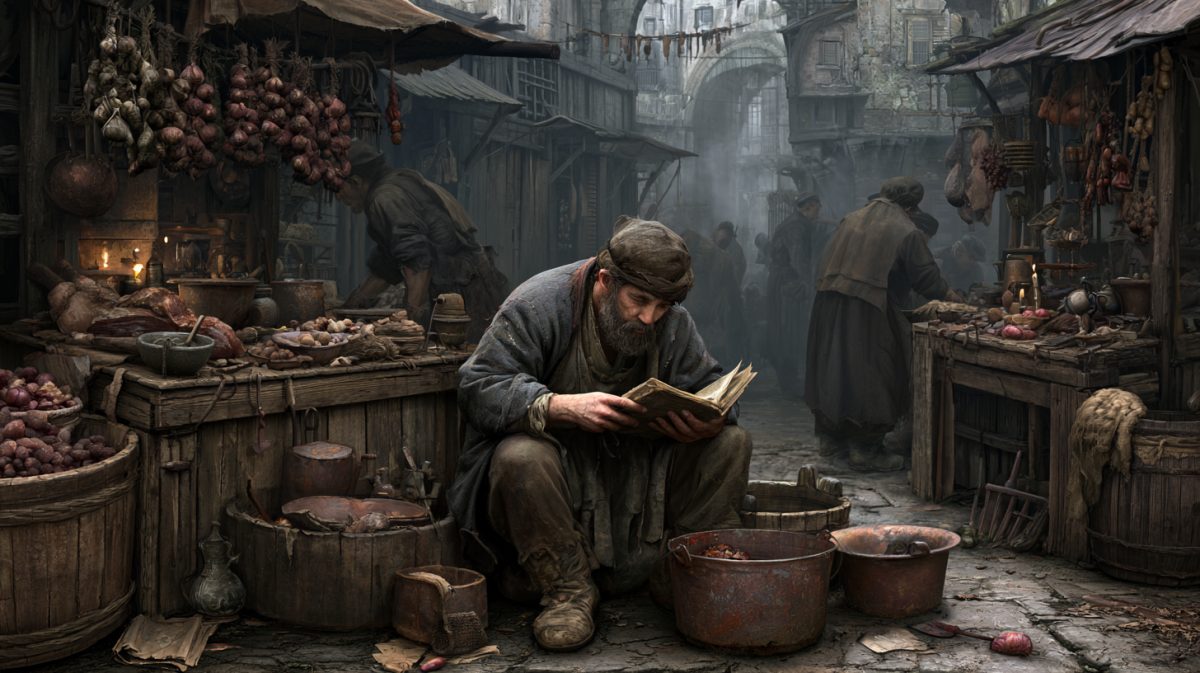
A useful way to visualize the Marketplace is as a large indoor bazaar divided into four separate halls. Each hall specializes in a different category of goods, but they all operate in exactly the same way. You enter a hall, choose the product that interests you, and see a list of players currently selling it along with their asking prices. You may purchase from any existing offer, or create your own listing to sell something you own.
Once you understand how one section works, you understand them all.
The first section is the **Raw Materials Market**. This is where you will find the basic resources that serve as the foundation of every production chain. Wood, stone, clay, metals, grain, agricultural products, and gold ore are all traded here. These materials are the building blocks that feed your industries.
The second section is the **Consumer Goods Market**. Instead of raw inputs, this hall contains finished products that satisfy the needs of your citizens. Food, beverages, tobacco, clothing, and jewelry all belong here. These are the products that complete the production process and generate value for your growing city.
The third section is the **People Market**, where players buy and sell workers and specialists. Since labor is essential for operating buildings efficiently, this market allows cities to balance their workforce by exchanging employees with one another.
Finally, there is the **Share Market**, where players trade CoinRepublik shares using GOLD. Unlike physical goods, these shares represent ownership within the game's economy and provide opportunities for long-term investment.
Notice how naturally these four sections fit together. Raw materials begin the production chain. Consumer goods are the finished results. Workers provide the labor needed to create them. Shares represent investments in the wider economy. During your first days, you will spend most of your time in the first two markets, buying production inputs and selling finished outputs.
The reassuring part is that every market follows exactly the same process. Choose an item, compare available offers, decide whether to buy, or post your own listing for sale. There are no hidden mechanics or complicated procedures. Buying and selling remain simple no matter what category you are trading.
Over the next lessons, you will explore each market in greater detail. You will learn how to place buy and sell orders, understand market fees, compare prices, and read product pages like an experienced trader. There is no need to memorize everything immediately. Each concept builds naturally on the previous one.
For now, remember only one simple idea: the Marketplace is where money becomes goods, and goods become money.
The best way to learn is not by reading every guide before taking action, but by making a small, harmless trade yourself. Visit the Raw Materials Market, choose an inexpensive resource, purchase a small quantity, and watch it appear automatically in your city's warehouse. That single transaction will teach you more about the Marketplace than several pages of theory.
There is no penalty for being cautious. Market offers usually remain available for some time, and a small purchase is unlikely to have any significant impact on your city's finances. Treat your first trades as practice rather than high-stakes decisions. Confidence comes naturally through experience.
One final detail is worth remembering. Everything you buy on the Marketplace is delivered directly to your city's shared warehouse. This is the same storage facility where all of your buildings deposit the resources they produce. Whether a sack of grain comes from your own farm or from another player's market offer, it ends up in exactly the same place. From there, your buildings can immediately use it for production without requiring any additional transport or management.
Once you understand this simple flow—produce, trade, store, and produce again—you will have mastered the foundation of the game's economy. Every successful city, from the smallest village to the largest industrial empire, follows this same cycle. The Marketplace is not just another feature; it is the connection that keeps your entire city alive and growing.