How Clearing Every Plot Gave Me a Brand New City
E

Elruth
Jul 24, 2026 · EN
113
30
13
Earned
1.87 PAB · the local value of 0.0001 gold from the author's country treasury for every read and every like
When I first joined CoinRepublik, I thought the objective was simple. Build as much as possible, as quickly as possible. Every empty tile looked like an opportunity, so I filled it. If I unlocked a new building, I placed it wherever there was space. Farms sat next to workshops, houses squeezed between factories, and roads were built only when I absolutely needed them. My city grew quickly, and I was convinced I was making excellent progress.
For the first few days, everything seemed to work. My production increased, I had enough workers to keep my businesses running, and every login brought another expansion. Looking at my city from above, it appeared busy and productive. I couldn't imagine that I was creating problems that would only become visible later.
Those problems started appearing as soon as I unlocked more of the game's mechanics.
I began learning how the Market's influence actually worked. Then I discovered the importance of buildings like the Police Station and Fire Station. Suddenly, building placement mattered far more than I had realized. These weren't buildings that could simply be placed anywhere. Their areas of influence would determine how efficiently my city could operate.
That was the moment I understood that my city had no real plan.
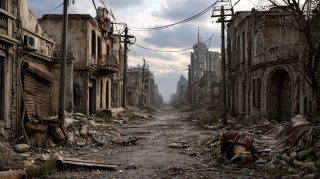
Every building had been placed wherever there happened to be an empty tile. My production areas were scattered across the map, roads curved around random structures, and there was no room to create organized industrial districts. Whenever I wanted to add a support building, I had to figure out what I was willing to sacrifice.
The more I expanded, the worse it became.
I found myself trying to fit important buildings into tiny gaps between factories. Sometimes I had to demolish roads that I had built only a few days earlier. Other times I realized that a Market would have been much more effective if I had simply left an open space in the center instead of filling every available tile.
Instead of building my city, I was constantly correcting it.
One evening, after spending far too much time trying to reorganize a small section of my town, I stopped and zoomed out.
Looking at the map, I realized something obvious.
I wasn't going to solve the problem by moving one building at a time.
The problem wasn't a single factory.
The problem was the entire layout.
That was when I made what seemed like a very strange decision.
I would stop expanding my industries completely.
For one full week, I would focus on something that almost nobody gets excited about.
I was going to clear land.
Every day I logged into CoinRepublik with the same goal. I worked to earn local currency, cleared another group of forest tiles, connected new roads, and expanded the borders of my town. While other players were unlocking new industries or upgrading production chains, I was patiently creating space.
It honestly felt slow.
Some days it seemed like I wasn't making any progress at all. My warehouse wasn't filling with new products, and I wasn't building exciting factories. I wondered more than once if I was wasting valuable time that could have been spent producing resources instead.
Still, I kept going.
Little by little, the forests disappeared.
The empty areas became larger.
Roads stretched farther across the landscape, connecting every new section of land.
Then one day, I finished clearing the final plot.
I zoomed out again.
This time, I wasn't looking at the cramped little town I had started with.
I was looking at something completely different.
It felt like I had just discovered a brand new city.
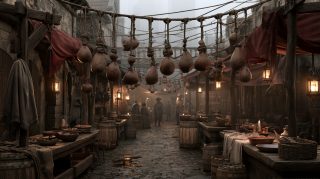
Instead of seeing buildings squeezed into every available corner, I saw possibilities. There was room to create proper industrial zones. I could finally place Markets where they would provide the greatest coverage instead of wherever I happened to find an empty tile. I had enough space to reserve central locations for future Police Stations, Fire Stations, warehouses, and whatever support buildings might be introduced later in the game.
For the first time since I started playing, I wasn't reacting to problems.
I was designing.
I began sketching ideas before placing anything. Production buildings could be grouped together by industry. Residential areas could be separated from heavy production. Main roads could be kept wide and straight instead of winding around old mistakes. Empty spaces were no longer wasted land. They became part of the plan, giving me flexibility for future expansions.
The difference was incredible.
Building suddenly became enjoyable instead of frustrating.
Every new structure had a logical place.
Every road served a purpose.
Every district felt intentional.
Looking back, I realized that clearing land had cost me quite a bit. It required energy, local currency, patience, and many hours of work. For an entire week, I delayed short-term growth in exchange for something that couldn't be measured by production numbers.
Freedom.
That freedom has already paid for itself many times over. I no longer need to demolish buildings every time I unlock something new. I don't have to squeeze important support buildings into awkward locations. Planning future expansions has become simple because I already have the space waiting for them.
If I could give one piece of advice to every new mayor, it would be this.
Don't think of clearing land as an expense.
Think of it as preparing the foundation for the city you actually want to build.
Factories can always be constructed later.
Roads can always be extended.
Production can always increase.
But having enough room to design your city properly from the beginning is a luxury you'll appreciate every single day afterward.
Sometimes the biggest upgrade you can make isn't a new building.
Sometimes it's giving yourself the space to build your vision exactly the way you imagined it.